The Ultimate Guide to a Worry-Free Long-Distance Residential Move
A long-distance move is far more than simple logistics; it represents a major life transition. Moving across state lines often marks the beginning of a fresh chapter: pursuing a major career advancement, purchasing a forever home for a growing family, or rightsizing for a peaceful, well-earned retirement.
However, transitioning an entire household state-to-state introduces complex challenges, emotional shifts, and financial realities that go beyond standard moving tasks. The fear of unreliable movers, unexpected fees, and damaged belongings can easily overshadow the excitement of your next horizon.
As a premier licensed and insured moving company, Atlas® Van Lines understands that an interstate move is a high-stakes transition requiring absolute care, transparency, and structure. This comprehensive guide provides the strategic framework, logistical tools, and expert tips needed to turn moving stress into a seamless journey.
Chapter 1: Planning Your Move — Timelines, Budgeting, & Decluttering (8–12 Weeks Out)
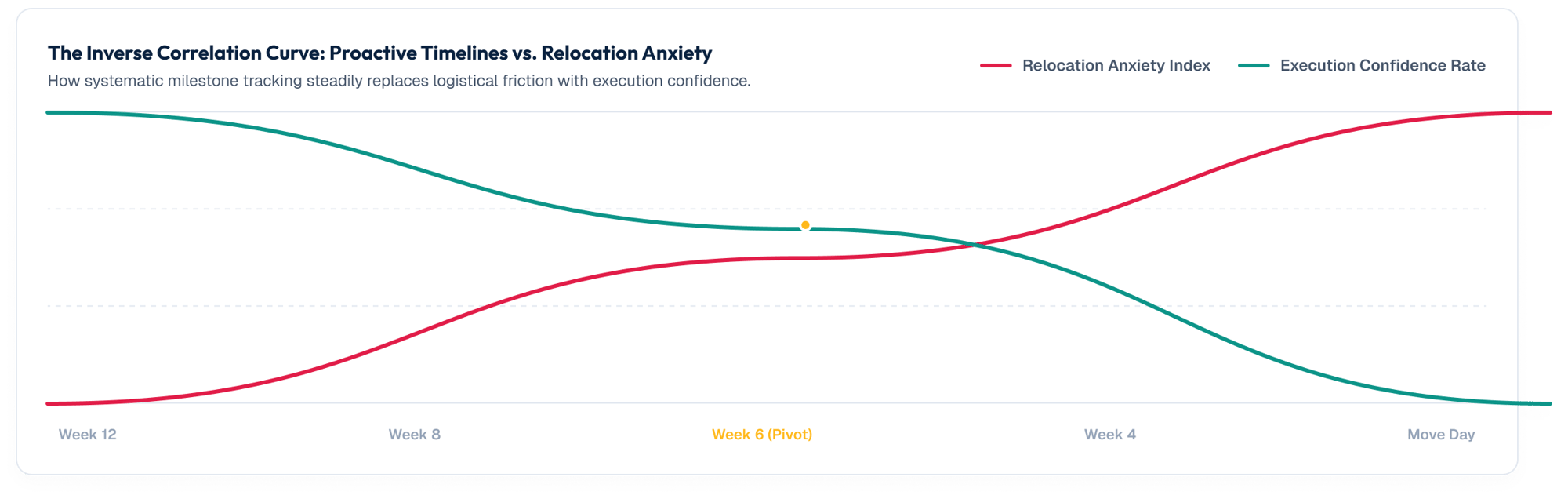
Setting the Operational Blueprint
A successful cross-country transition is built months before the first moving truck arrives at your driveway. Starting your preparation 8 to 12 weeks in advance gives your household the necessary runway to organize paperwork, compare options, and systematically clear out physical clutter without feeling rushed.
Setting up a centralized "Moving Control Hub"—whether a physical binder or a dedicated digital folder—allows you to track real estate agreements, utility transfer dates, inventory lists, and moving receipts in one accessible location.
Budgeting Foundations for Interstate Relocations
Budgeting for a state-to-state move requires looking beyond baseline transit fees. A complete financial outline accounts for both direct operational services and secondary transition buffers.
.png?width=2000&height=926&name=table-container%20(4).png)
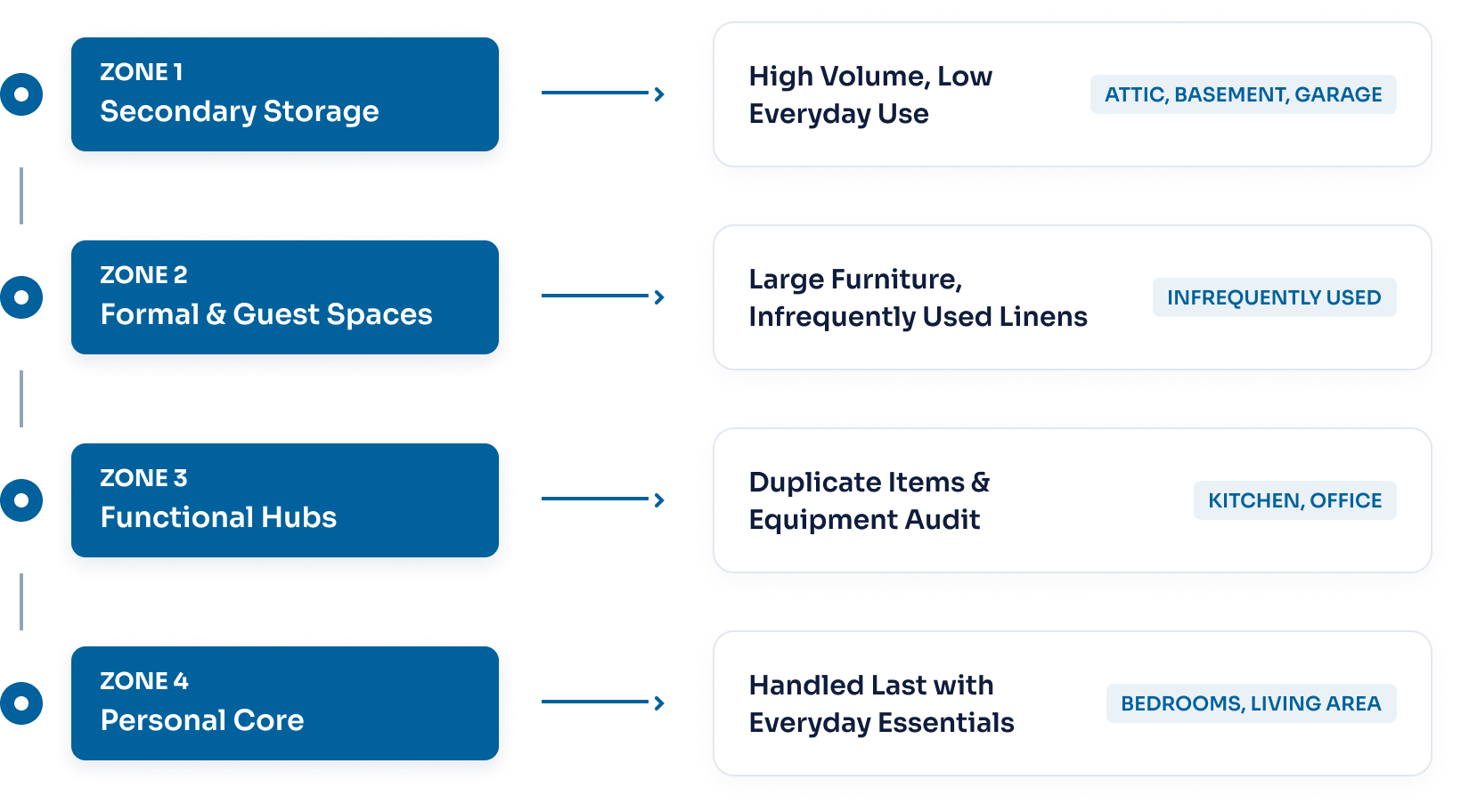
The Room-by-Room Decluttering Strategy
Moving items you no longer use across state lines increases transit volume and unnecessary effort. Execute a systematic decluttering matrix to streamline your shipment before packing begins:
Chapter 2: Choosing a Reputable Long-Distance Mover — Red Flags & Credibility
Navigating Industry Red Flags
Entrusting your life's possessions to an unverified mover introduces significant financial and emotional risks. Identifying potential scams early keeps your move protected:
-
Refusal to Conduct a Detailed Survey: Unethical operators often provide binding price guarantees over the phone without conducting an in-person or virtual walkthrough.
-
Unusually Low Upfront Estimates: An artificially low quote is frequently used to secure a contract, only for hidden fees to be tacked on later.
-
Large Upfront Cash Deposits: Reputable interstate carriers bill upon delivery or through structured corporate payment channels rather than demanding large cash deposits upfront.
-
Lack of Valid Licensing: Unverified movers often lack federal registration, USDOT credentials, or proper insurance documentation.
Recognizing the Green Flags of a Trusted Partner
A reliable long-distance moving partner prioritizes transparency, safety credentials, and customer communication from start to finish:
.png?width=2000&name=diagram-container%20(1).png)
-
Verified Federal Credentials: Interstate movers must maintain active authorization with the Federal Motor Carrier Safety Administration (FMCSA) and hold a valid United States Department of Transportation (USDOT) number.
-
Transparent Written Estimates: Professional movers provide clear, itemized estimates following a detailed inventory survey.
-
Dedicated Relocation Coordinators: A primary point of contact guides you through every step, providing updates and answering questions along the way.
Questions You MUST Ask Before Hiring
Before signing a contract, ask these key questions to evaluate any moving provider:
-
Are you a direct licensed carrier or a freight broker?
-
What specific valuation protection options do you provide for high-value items?
-
How do you handle delivery windows and transit tracking for long-distance routes?
Chapter 3: The Packing & Protection Strategy — DIY vs. Professional White-Glove

1. DIY Packing Approach
- Best For: Smaller residences or individuals with flexible timelines who prefer to handle their items directly.
- Execution Focus: Requires acquiring heavy-duty double-walled boxes, industrial bubble wrap, unprinted packing paper, and cell-pack dividers for glassware. Avoid using weak store-grocer boxes that can collapse during stack transit.
2. Professional White-Glove Full-Service Packing
- Best For: Busy professionals, multi-bedroom family homes, and retirees seeking a completely hands-off experience.
- Execution Focus: Trained, background-checked specialists arrive with high-grade packing materials to catalog, wrap, box, and label your entire home in a fraction of the time.
Protecting High-Value and Delicate Assets
Standard cardboard moving boxes cannot adequately protect high-value, fragile, or uniquely shaped household items during cross-country transit.
- Custom Wooden Crating: Delicate artwork, oil paintings, marble tabletops, grandfather clocks, and high-end electronics require custom-built wooden crates tailored to their exact measurements.
- Climate-Controlled Transit Options: High-end wooden instruments, antiques, and delicate heirlooms benefit from climate-controlled transport environments to prevent warping or finish damage caused by extreme temperatures.
Packing the "First Night" Essentials Box
When moving long distances, your primary shipment may arrive shortly after you reach your new residence. Pack a dedicated, easily accessible container or personal suitcase that travels directly with you containing:
- Daily prescription medications and basic first-aid items.
- Phone, laptop, and tablet chargers.
- Toiletry kits, bath towels, and comfortable changes of clothes.
- Vital personal identity documents, financial files, and real estate papers.
- Children's comfort items, favorite toys, or pet care supplies.
Chapter 4: The Atlas® Process — What to Expect from Start to Finish
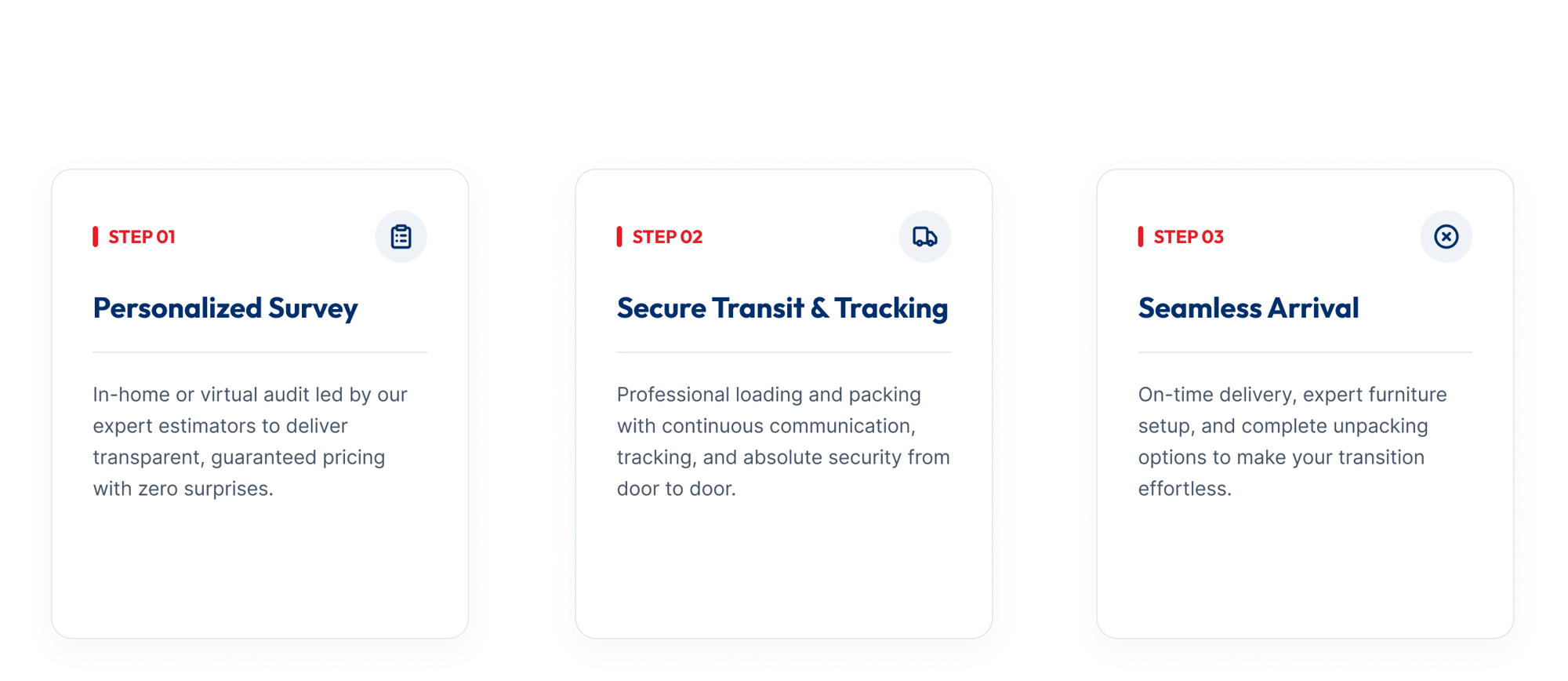
Step 1: Personalized Consultation & Survey
We begin by conducting a thorough in-home or virtual survey to review your household items. This allows us to assess shipment volume, discuss access details, identify items needing custom crating, and build a tailored moving plan without hidden costs.
Step 2: Expert Packing & Secure Transport
On packing and moving day, vetted, background-checked professional crews handle your belongings with expert care. Furniture is padded and wrapped, items are systematically cataloged, and shipment loading is completed using proven techniques. Throughout transit, you receive continuous updates from your dedicated moving coordinator.
Step 3: Seamless New Home Arrival
Upon arrival at your new residence, our crew places furniture according to your floor plan, reassembles beds and tables, and unloads labeled boxes into their designated rooms. With professional setup and debris removal options, you can focus on settling in comfortably.
Real Moves, Real Peace of Mind
"We have moved nine times over the last 50 years, and this was by far the best experience we have ever had. The care, communication, and professionalism were exceptional from start to finish." — Tom, Relocated from Minnesota to Florida
Chapter 5: Moving Day & Beyond — Settling into Your New Horizon

Executing Moving Day with Confidence
Moving day runs smoothly when supported by a clear final checklist:
- Perform a Final Home Walkthrough: Check all closets, cabinets, basements, attics, and outdoor sheds one last time to ensure nothing is left behind.
- Verify the Inventory Form: Review the driver’s official inventory manifest, confirming item descriptions and baseline condition notes before transit begins.
- Secure the Property: Ensure windows are locked, lights are turned off, HVAC controls are adjusted, and keys are returned or handed off according to your real estate agreement.
Immediate Home Setup & Safety Sweeps
When arriving at your new residence, prioritize setting up key functional areas first to establish immediate comfort:
- Set Up Emotional Anchors First: Assemble beds and unpack primary children's rooms or main bedrooms right away. Having familiar bedding and personal items in place ensures a restful first night.
- Conduct an Initial Safety Sweep: Check that smoke detectors and carbon monoxide alarms are functional, test key appliances, and ensure entry walkways are clear.
- Inspect Delivered Cargo: Cross-check boxes against your inventory manifest during unloading to confirm everything has arrived securely.
Integrating into Your New Community
Settling into a new city or state is an ongoing process that extends past moving day:
- Establish Routine Anchors: Locate key everyday services early—such as local grocery stores, pharmacies, hardware shops, and community parks.
- Complete Local Registrations: Update your vehicle registration and driver's license, transfer voter records, and confirm district enrollment for school-aged children.
- Connect with Neighbors: Take brief walks, introduce yourself to adjacent neighbors, and explore local community events to build a welcoming local network.
Frequently Asked Questions
How far in advance should I schedule a long-distance move?
For an interstate move, we recommend booking your mover 8 to 12 weeks ahead of your preferred date. Planning early ensures availability during peak moving seasons and provides ample time to complete home preparation without stress.
What is the difference between a binding and non-binding moving estimate?
A binding estimate outlines a set cost based on the surveyed inventory. A non-binding estimate calculates final costs based on the actual weight of your shipment and additional services requested on moving day. Atlas® Van Lines provides clear, transparent estimate options so you can choose the best fit for your budget.
Why is hiring a licensed USDOT carrier essential for interstate moves?
Licensed USDOT carriers are bound by strict federal safety standards, carrying mandatory insurance coverage and offering formal valuation protection. Hiring a fully licensed carrier protects your financial investment against transit risks or unauthorized operators.
Can Atlas® Van Lines hold my belongings in storage if my new home isn't ready?
Yes! Atlas® Van Lines offers secure, climate-controlled storage-in-transit (SIT) options. We hold your household shipment in a monitored facility until your destination residence is ready for delivery.
Transitioning to a new state should be an exciting step forward, not a burdensome logistical challenge. Let Atlas® Van Lines handle the details with the care, professionalism, and reliability your move deserves.